Drip Starts in Your Head: Why Your Energy Is the Most Expensive Thing You Own

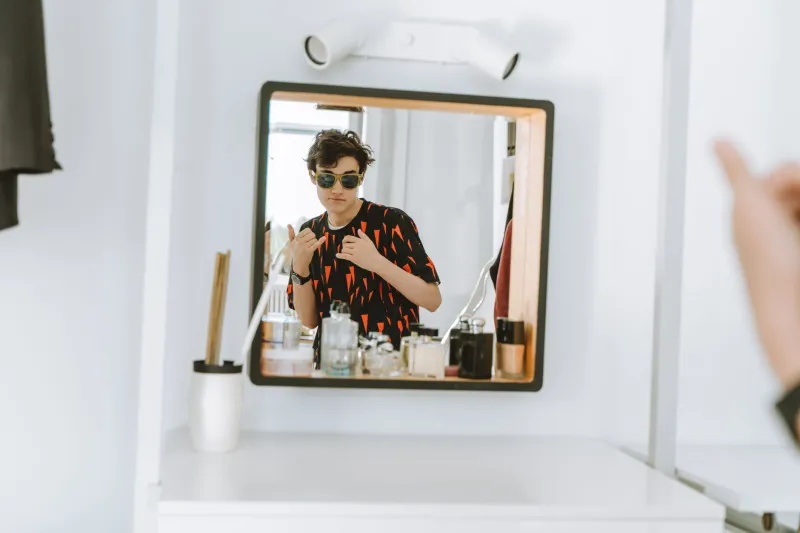
Photo: confident young man streetwear urban fashion attitude posture city, via as1.ftcdn.net
You've seen it happen. Someone walks into the room rocking a plain white tee, some worn-in jeans, and a pair of sneakers that have clearly been around the block — and somehow, everyone clocks them. Meanwhile, the person next to them is draped in head-to-toe designer, logo stacked on logo, and they're practically invisible. The fit doesn't explain the difference. The person does.
This isn't some feel-good motivational speech. There's actual psychology behind why certain people make thrift store finds look like runway pieces while others can't pull off a fresh drop no matter how much they spent on it. And once you understand what's really going on, you'll stop chasing price tags and start investing in the thing that actually moves the needle.
The Science of Why Some People Just Hit Different
Researchers who study social perception have a term for it: presence. It's the combination of posture, eye contact, movement, and nonverbal communication that signals to everyone around you how you feel about yourself. Studies out of institutions like Harvard and Columbia have shown that body language doesn't just affect how others perceive you — it literally changes your own hormonal chemistry. Power postures increase testosterone and decrease cortisol. Translation: standing like you own the room actually helps you feel like you do.
In fashion terms, that internal shift is everything. Confidence changes how fabric sits on your body. It changes how you carry a silhouette. A person who walks with intention makes an oversized hoodie look intentional. Someone who's uncomfortable in their own skin makes a perfectly tailored jacket look like a costume.
Street culture has always known this, even without the lab coats. The legends of the block — the ones whose style got studied and copied for decades — weren't always the ones with the most money. They were the ones with the most conviction.
Authenticity Isn't a Vibe. It's a Force.
Here's where it gets deeper. Presence alone isn't enough if it isn't rooted in something real. Performed confidence is easy to spot — it's stiff, it's try-hard, and it reads as insecurity wearing a mask. What actually turns heads is authenticity, which is a different animal entirely.
Authenticity means your fit reflects who you actually are, not who you think you're supposed to be. It means wearing something because it speaks your language, not because it's trending on someone else's feed. When your clothes are an honest extension of your personality, they stop being clothes and start being communication. People feel the coherence of it, even if they can't articulate why.
That's the reason a kid from the South Side of Chicago can throw on a vintage Bulls cap, some beat-up Jordans, and a thrifted windbreaker and look like a walking editorial — because every piece connects to something true about who they are. There's no friction between the person and the fit. It all moves as one.
Posture Is a Power Move Nobody Talks About Enough
Let's get tactical for a second. If you want to elevate any outfit — budget or not — posture is the most underrated tool in your kit. Shoulders back, chin level, chest open. That's it. That single adjustment changes the entire silhouette of whatever you're wearing and signals to the room that you're not asking for permission to be there.
Think about every style icon you've ever admired. Now picture them slumped. Doesn't work, right? The clothes are the same. The person is different. Posture is the frame around the painting, and a bad frame can ruin a masterpiece.
Beyond the physical, there's the question of how you move. Rushed, scattered energy makes even the cleanest fit look chaotic. Deliberate, unhurried movement — walking like you've got somewhere to be but you're not in a panic about it — communicates a kind of cool that no brand can manufacture and no price point can buy.
The Brand That Lives Inside You
Streetwear culture is obsessed with branding for a reason. A logo is shorthand — it tells the world something about your tastes, your tribe, your status. But the most powerful brand you carry has no logo. It's the story you tell through your energy, your choices, and the way you show up.
Some of the most influential style figures in US street culture built their entire aesthetic around scarcity — not financial scarcity, but intentional scarcity. Fewer pieces, more meaning. Less noise, more signal. When everything you wear is chosen with purpose, people start to pay attention to your curation in a way they never would if you were just throwing money at the problem.
That's the flex that doesn't depreciate. Hype fades. Resale value drops. Trends cycle out. But the person who's locked into their own identity, who's comfortable enough in their skin to make any outfit look inevitable — that person stays relevant regardless of what season it is.
How to Actually Build This
So if personality is the accessory, how do you level it up? A few things that actually work:
Know your signature. Not a specific item, but a feeling. What do you want people to feel when they see you? Build from that answer outward.
Wear what you'd wear alone. If you'd only put it on with an audience, it's a costume. If you'd wear it running errands with no one watching, it's your real style.
Stop apologizing for your fit. Hesitation is visible. When you walk out the door, commit. Own the choices you made that morning. Second-guessing yourself while you're wearing something is the fastest way to make it look wrong.
Practice the physical. Posture isn't automatic for most people. Check in with yourself throughout the day. Shoulders. Chin. Chest. Repeat until it's muscle memory.
Curate your influences. If your entire style feed is people who make you feel like you're behind, you're feeding insecurity. Follow people whose energy inspires you, not just their fits.
The Real Status Symbol
At the end of the day, streetwear has always been about more than clothes. It's been about identity, about community, about saying something without saying a word. The brands and the pieces matter — but they're the vehicle, not the destination.
The destination is the version of you that walks into any room, in any fit, at any price point, and makes everyone in it feel like they're watching something real. That version of you doesn't need a co-sign from a label or a cop from a limited drop. It just needs you to stop outsourcing your confidence to your wardrobe and start wearing it from the inside out.
That's the fit that costs nothing. And it's the one nobody can take off you.