Go Big or Go Home: The Real Reason Gen Z Went Oversized and Never Looked Back
Let's be real for a second. If you graduated high school between 2008 and 2016, you probably owned at least one pair of jeans so tight they required a specific technique to get off. Skinny jeans were the law. Fitted everything was the expectation. And if your shirt wasn't tucked, tapered, or otherwise molded to your body, you weren't dressed — you were just wearing clothes.
Gen Z looked at all of that and said: absolutely not.
The shift toward oversized silhouettes didn't happen because of one designer or one viral moment. It happened because an entire generation decided, collectively and loudly, that fashion built around restriction wasn't fashion worth wearing. And in doing so, they accidentally — or maybe deliberately — started one of the most significant style movements in recent American streetwear history.
The Rebellion Nobody Planned
Every generation pushes back against the one before it. That's not new. But what makes the oversized movement interesting is that it wasn't just aesthetic rejection — it was ideological. The fitted, slim-everything look of the 2000s and early 2010s came loaded with a specific set of values: conformity, body-consciousness, and a kind of aspirational thinness that didn't reflect how most people actually looked or felt.
Gen Z — a generation that grew up watching the body positivity movement take shape online, that came of age during a pandemic that made sweatpants feel like formal wear — wasn't interested in dressing for an idealized version of themselves. They wanted to dress for who they actually were. And apparently, who they actually are is someone who wants room to breathe.
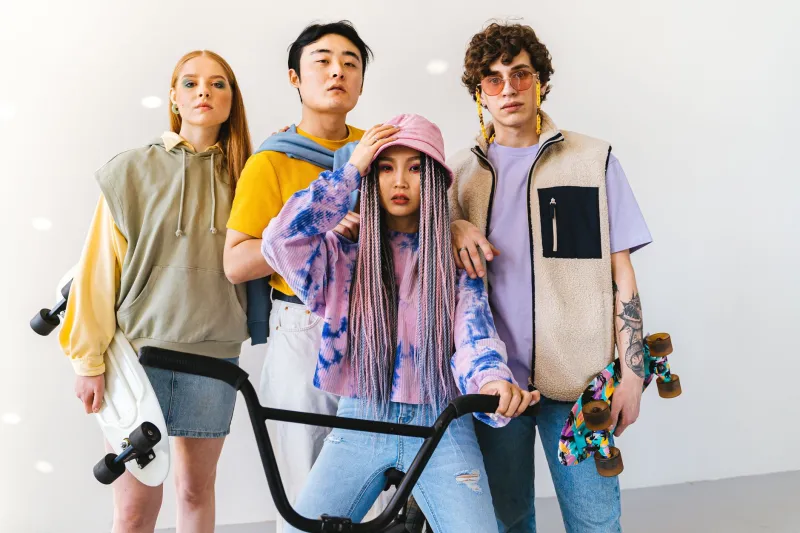
There's also a direct line from hip-hop and skateboarding culture to the oversized explosion. Both scenes have favored baggy, relaxed fits for decades — not because they were trying to make a fashion statement, but because that's what felt right. When those aesthetics crossed over into mainstream youth culture, they brought their proportions with them.
This Isn't Sloppy — It's Intentional
Here's where a lot of people get it wrong. Seeing oversized clothing and thinking it means anything goes is like seeing a minimalist apartment and thinking the owner just didn't bother decorating. The restraint is the point. The intention is the point.
Wearing oversized pieces well is actually harder than it looks. The goal isn't to disappear inside your clothes — it's to create proportion, balance, and visual interest through volume and layering. When it works, it looks effortless. When it doesn't, yeah, it looks like you grabbed something out of the lost and found.
So let's break down how to actually do this right.
How to Style Oversized Fits Without Losing the Plot
Balance volume with structure. The number one rule: if the top is massive, the bottom should have some definition — and vice versa. A huge hoodie works with slim-cut cargo pants or straight-leg jeans. Baggy shorts work with a fitted or tucked tee. You're not trying to be shapeless. You're playing with proportion.
Layer with purpose. Oversized culture loves a good layer. An open flannel over a graphic tee over a long sleeve — but each piece should be doing something. Don't just pile clothes on. Think about color blocking, texture contrast, and how the layers interact when you move.
Let your shoes anchor the fit. Big fits need grounded footwear. Chunky sneakers, work boots, and low-profile classics all work. What doesn't work is a massive outfit sitting on top of a tiny shoe with nothing to visually hold it down. Your kicks are doing structural work here.
Know your oversized scale. Not every oversized piece is the same. A tee that's two sizes up is different from a tee that's four sizes up. Start with one to two sizes over your usual and work from there. You want intentional volume, not accidental drowning.
For different body types: If you're on the shorter side, keep oversized pieces cropped or tucked at the front to maintain some visual height. If you're taller, you have more room to go full-length and wide. If you're larger, lean into the trend fully — oversized was literally designed to look good on bodies of all sizes, which is part of why it resonated so hard with Gen Z in the first place.
What This Trend Actually Says About Now
Fashion has always been a mirror. And what the oversized movement reflects back is a generation that's done performing comfort it doesn't feel. Done squeezing into expectations that were never built for them. Done treating their body like something to minimize or contain.
There's a confidence in wearing a massive fit that people don't always clock right away. It takes security to walk into a room in something that big and own it. No apology in the silhouette. No shrinking. Just presence.
At Savage Gear, that energy is exactly what we build around. The street doesn't reward people who play it safe. It rewards people who show up fully, take up space, and mean every single thing they're wearing.
The Millennial Comeback That Isn't Coming
Skinny jeans had a moment last year where think pieces declared them back. Gen Z clapped back immediately and with zero mercy. The verdict was swift and pretty final: that era closed. The proportions that defined a generation of mall culture and early Instagram aesthetics aren't getting a revival anytime soon — at least not among the people currently setting the tone.
And honestly? Good. Fashion is better when it moves. When it challenges. When it refuses to stay comfortable in its own past.
Go oversized. Go bold. Take up the space you were always supposed to occupy.