Dig, Find, Flip: Inside the Street Culture of Turning Thrift Store Hauls Into One-of-One Fits
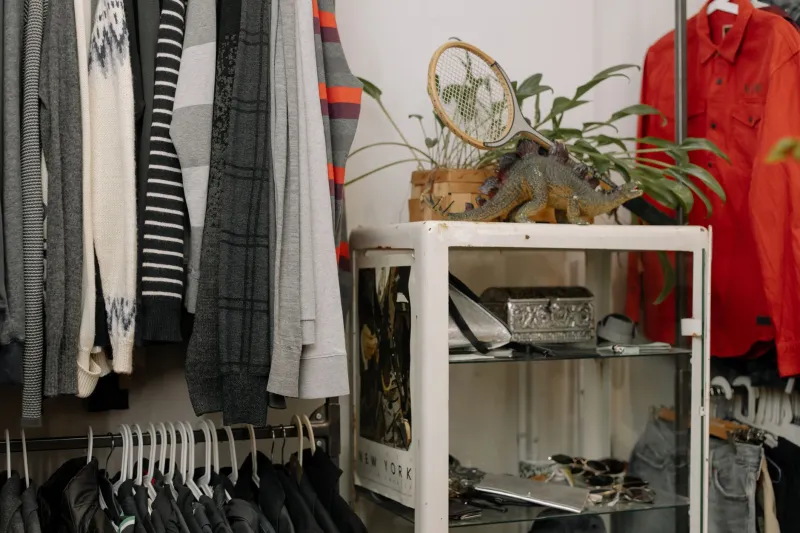
Somewhere between the racks of donated church clothes and the bin of mismatched athletic gear, there's a vintage Starter jacket from 1994 with the tags still on it. There's a pair of Carhartt double-knees worn in just right. There's a heavyweight crewneck from a college you've never heard of, in a colorway that some design team at a major brand would pay serious money to recreate.
The people who find these things aren't lucky. They're strategic. They're patient. And they've built a culture around the hunt that's quietly reshaping how young Americans think about fashion, sustainability, and originality.
This is the world of serious thrifting — and it goes way deeper than a casual weekend Goodwill run.
The Hunt Is the Whole Thing
Ask any committed thrifter what keeps them coming back and they'll tell you the same thing: it's the search. Fast fashion gives you a product. Thrifting gives you a mission. You walk in not knowing what you'll find, and that uncertainty is addictive in a way that scrolling through an online store never will be.
The culture has its own language. "Digging" refers to the physical act of going through racks and bins — and it is physical. Hours on your feet, hands moving through hundreds of hangers, eyes trained to catch the right label, the right fabric weight, the right fading on a graphic. It's part treasure hunt, part archaeological dig, part meditation.
Serious diggers hit multiple spots in a single day. Goodwill and Salvation Army are entry points, but the real finds often come from estate sales, church thrift shops in older neighborhoods, Habitat for Humanity ReStores, and the kind of mom-and-pop vintage spots that don't have Instagram accounts. The less curated the store, the higher the ceiling on what you might pull out of it.
Knowing What You're Looking At
The difference between someone who finds heat and someone who walks out empty-handed usually comes down to knowledge. Thrifting at a high level is an education in fashion history, brand heritage, material science, and cultural context. You have to know what you're looking at to know what you've found.
Here's a practical breakdown of what serious thrifters are hunting for and why:
Vintage sportswear (pre-2000): Starter jackets, Champion reverse weaves, Russell Athletics heavyweights, and early Nike and Adidas pieces from the '80s and '90s carry serious resale value and look incredible in a modern fit. The key identifiers are tag placement, stitching quality, and fabric weight — older pieces are almost always made better than their modern equivalents.
Workwear: Carhartt, Dickies, and vintage Levi's are perennial targets. Look for pieces with authentic wear — fading, distressing, and patina that took decades to develop. A pair of Carhartt Double Front pants with the right amount of natural wear is worth infinitely more than a new pair with factory-added distressing.
Collegiate and local graphic tees: Old university shirts, local business tees, and regional event shirts from the '80s and '90s are one-of-one by nature. Nobody else has that exact shirt from a 1987 5K run in Baton Rouge. That's the point.
Denim: Vintage Levi's — particularly 501s, 505s, and 517s from the '70s through '90s — are among the most sought-after thrift finds in the country. Check the red tab, the stitching on the back pocket, and the interior tag. Pre-1971 pieces have a capital E on the Levi's tab. That matters to collectors.
Military and utility gear: Field jackets, flight suits, cargo pants, and surplus pieces have been a streetwear staple for decades. Authentic military surplus, especially from the Vietnam era, has a weight and construction quality that modern reproductions can't touch.
The Flip Economy
For a significant chunk of the thrifting community, the goal isn't just building a personal wardrobe — it's also building a side income. The resale market for vintage clothing has exploded over the past five years, driven by platforms like Depop, Grailed, eBay, and Poshmark, and the numbers are not small.
A vintage Champion hoodie bought for $4 at a Goodwill in the Midwest can sell for $80 to $150 on Depop depending on color and condition. A Starter jacket in good shape can move for $200 to $400. Rare vintage tees — particularly those with regional significance or unusual graphics — regularly sell for several hundred dollars to collectors who've never set foot in a thrift store.
The best resellers are essentially running a small fashion business out of their car trunks. They know the market, they know their buyers, and they understand the difference between a piece that's worth holding and a piece that's worth flipping immediately. Some specialize in a particular era or category. Others cast wide nets and let the market tell them what's valuable.
This isn't just hustle culture — it's a legitimate retail ecosystem that's creating economic opportunity while simultaneously keeping quality vintage pieces in circulation rather than in landfills.
Why This Matters to Street Culture
Fast fashion's business model depends on everyone wanting the same thing at the same time. Thrifting culture is the direct antidote to that. When your fit is built from pieces you dug out of a bin in a church basement in Chattanooga, nobody — not one person on the planet — is wearing the exact same thing. That's not just a flex. That's a philosophy.
Streetwear has always valued originality above almost everything else. The culture rewards people who develop their own eye, their own references, their own point of view. Thrifting is one of the most direct paths to that kind of authenticity because it forces you to make choices that aren't pre-curated by an algorithm or a brand.
You can't put a thrift store haul on autopilot. You have to know what you like, know what works, and trust your own instincts. That's exactly the kind of energy that streetwear — real streetwear, the kind that comes from the streets and not from a mood board — has always been built on.
The Sustainable Side Nobody's Ignoring
Here's the part that matters beyond the culture: buying secondhand is one of the most genuinely sustainable choices a consumer can make. The fashion industry is one of the largest polluters on the planet, and fast fashion accelerates that problem dramatically. Every piece bought secondhand is a piece that didn't require new production, new shipping, new packaging, and new waste.
Gen Z is aware of this in a way previous generations weren't. The environmental argument for thrifting isn't abstract — it's immediate and it's real. And it aligns perfectly with a generation that's already skeptical of brands making big sustainability claims while continuing to overproduce cheap clothing.
Thrifting is sustainable and it's original and it's financially accessible and it builds community. There are very few fashion habits that can say all four of those things at once.
Start Digging
You don't need to be an expert to start. You need a Saturday morning, a few bucks, and a willingness to look at a lot of stuff before you find the thing. Start local. Hit the spots in your city that don't show up on the first page of Google. Go to the estate sales in older neighborhoods. Check the bins.
The fit that stops people in their tracks is out there right now, hanging on a metal rack between a holiday sweater and a Members Only jacket. Go find it.