No Gatekeepers Allowed: How Gen Z Blew Up Streetwear's Unwritten Rulebook
There used to be a whole social tax attached to wearing streetwear. You had to know which brands carried weight, which collabs were worth camping out for, and — maybe most importantly — which combinations were considered a violation. Wear the wrong sneaker with the wrong hoodie and somebody online would let you know about it real fast. That era had a name, even if nobody called it that out loud: fit gatekeeping.
Now? That whole system is basically on life support. And Gen Z is the one who pulled the plug.
The Old Order and Why It Cracked
To understand why the shift matters, you have to appreciate how rigid those unwritten rules actually were. Early streetwear culture — rooted in skate, hip-hop, and sports — developed its own internal logic. Supreme didn't mix with fast fashion. Technical outerwear from Arc'teryx or Stone Island was reserved for people who understood its lineage. Vintage pieces had to be sourced correctly, worn correctly, and ideally copped before everyone else caught on.
There was a hierarchy baked into all of it. Access, knowledge, and money formed a kind of three-headed gatekeeper. If you didn't have all three, your fits got clowned. Simple as that.
But that model had a fatal flaw: it was built on scarcity and exclusivity at a time when information and access were becoming infinite. Once TikTok, Depop, and YouTube started putting styling knowledge in everyone's pocket, the old gatekeepers lost their leverage almost overnight.
Mixing Lanes Is the New Flex
The clearest sign that the rules are gone? Look at what people are actually wearing.
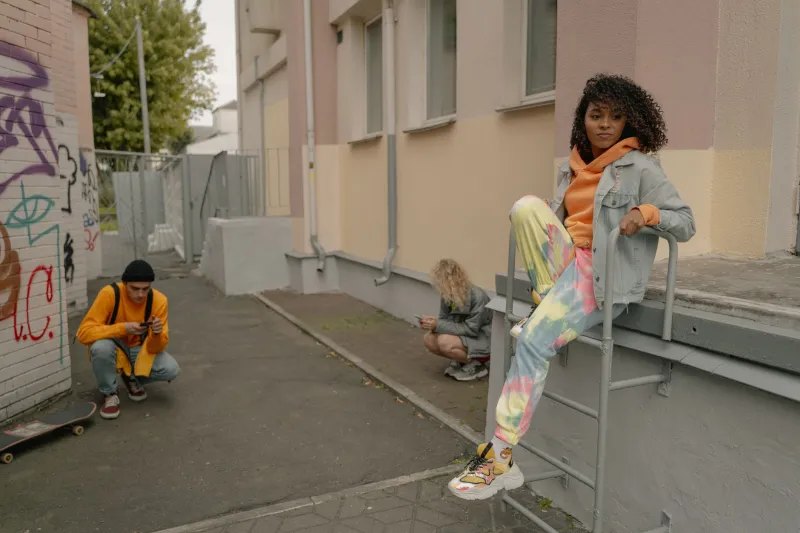
Right now, some of the most-copied fits on social media involve combinations that would have gotten you roasted five years ago. We're talking Carhartt work jackets thrown over silk vintage shirts. Techwear pants paired with beat-up New Balance 990s from a thrift bin. A $12 Goodwill blazer layered over a $300 technical fleece. Palace graphics next to pieces that cost less than a Chipotle burrito.
These aren't mistakes. They're statements. The whole point is the contrast — the deliberate refusal to stay in one lane.
Creators like Wisdom Kaye, Emma Chamberlain, and a wave of smaller micro-influencers with under 100K followers have made a whole aesthetic out of this kind of genre-defying layering. The common thread isn't brand prestige or price point. It's confidence and intentionality. You wear it like you meant it, and that's enough.
Thrift Meets Luxury — and Nobody's Mad About It
Maybe the biggest rule that got shredded was the one separating thrift from luxury. For a long time, mixing high-end pieces with secondhand finds was seen as either a budget move or a style mistake. Now it reads as the most authentic thing you can do.
Why? Because it signals that you're not just buying clout — you're actually building something personal. When someone shows up in a vintage Carhartt flannel they found for eight bucks sitting next to a pair of New Balances they saved up for, there's a story there. That story is more interesting than a head-to-toe designer fit any day of the week.
The resale and thrift market exploded partly because of economics — inflation is real, and not everyone's dropping racks on every fit. But it also exploded because Gen Z genuinely values the hunt. Finding something rare at a Salvation Army feels more like a win than clicking "add to cart" on a restocked drop. The process is part of the flex.
Breaking Rules as a Power Move
Here's the thing nobody in the old guard wants to admit: rule-breaking in streetwear isn't new. The entire culture was built on it. Hip-hop artists wore Adidas without laces as a direct rejection of mainstream fashion norms. Skaters trashed expensive sneakers on purpose. The original streetwear heads were rule-breakers by definition — they just eventually became the new establishment and started enforcing their own codes.
Gen Z is just continuing that original energy. The difference is scale and speed. When a 19-year-old in Atlanta puts together a fit that mixes techwear, thrift, and something they made themselves, and that fit hits on TikTok, it reaches millions of people before any traditional tastemaker can weigh in. The gatekeepers simply don't have time to keep up.
And honestly? The brands that are winning right now are the ones that recognized this early. Labels that lean into versatility — pieces that can be styled up or down, mixed with anything, worn by anyone — are eating. Rigid brand identities that depend on consumers following instructions are struggling to stay relevant.
Ownership Looks Different Now
What this whole shift really comes down to is ownership — not of clothes, but of identity. The old streetwear model asked you to buy into someone else's vision of cool. The new model says your vision of cool is the only one that matters.
That's a genuinely radical idea when you think about it. Fashion has always had gatekeepers because gatekeepers make money. They create aspirational hierarchies, sell access to those hierarchies, and profit from the anxiety of people trying to climb them. Gen Z, as a generation that grew up watching that system operate in real time, has largely decided to opt out.
Authenticity isn't about wearing the right things anymore. It's about wearing your things — the combination of pieces that tells your actual story, not a story borrowed from a brand's mood board.
What Comes Next
None of this means standards are dead. People still care deeply about quality, craft, and the story behind what they wear. If anything, those things matter more now that logo worship is fading. What's gone is the idea that there's one correct way to put it all together.
The kids who are influencing culture right now aren't waiting for permission. They're not checking with legacy accounts to see if their fit passes muster. They're just going. And the fits that hit — the ones that get screenshotted and reposted and turned into trends — are almost always the ones that break some rule nobody thought was breakable.
Savage Gear has always been about wearing the streets on your own terms. No handbook. No hierarchy. Just confidence, creativity, and the nerve to throw on whatever feels right and walk out the door like you own it.
The gatekeepers are gone. The streets are open. What you do with that is entirely up to you.