Same Fit, Different Energy: Why Repeating Your Outfit Is the Hardest Move in the Game
There's a moment that happens to almost everyone standing in front of their closet at 7 AM — that low-key panic of feeling like you have nothing to wear even though your shelves are stacked. You've got pieces, you've got options, and somehow none of it feels right. So you scramble, throw something together, and walk out the door feeling like a rough draft of yourself.
Now flip the script. Imagine already knowing exactly what you're putting on before you even open your eyes. No decisions, no second-guessing, no wasted mental energy. Just you, your fit, and all that confidence walking out the door like you own the block.
That's the uniform mindset — and it might be the most slept-on power move in fashion right now.
The Psychology Behind Wearing the Same Thing
There's actual science behind why people who repeat outfits tend to move differently. Decision fatigue is real. Every choice you make in a day — from what to eat to what to say in a meeting — draws from the same mental reserve. When you eliminate the daily wardrobe debate, you're essentially protecting that energy for things that actually matter.
It's not laziness. It's strategy.
Steve Jobs did it with the black turtleneck. Mark Zuckerberg does it with the gray tee. Barack Obama talked openly about wearing only blue or gray suits during his presidency because he didn't want to waste bandwidth on clothing decisions. These aren't people who couldn't afford variety — they made a deliberate choice to strip down the noise.
Now bring that same logic into streetwear culture, where the pressure to stay fresh and rotate new pieces can feel relentless, and suddenly the idea of committing to a signature look becomes genuinely radical.
Athletes Who Understood the Assignment
Sports culture has been doing this forever, even if nobody called it a uniform mindset. Think about Kobe Bryant, who was legendary for showing up to practice and press events in variations of the same clean, understated fit — black everything, minimal logos, nothing to distract from the work. Or look at how certain streetball legends in New York and LA became recognizable not because they were always wearing something new, but because they owned one aesthetic so completely that you could spot them from across a court.
In the current NBA era, players like Kawhi Leonard have built reputations for showing up to arenas in simple, repeated silhouettes while the rest of the tunnel fashion show plays out around them. That restraint reads as confidence. It says: I don't need your attention, but I've got it anyway.
The fit isn't the flex. The certainty is.
Streetwear's Quiet Rebels
Underground streetwear heads have been onto this for a minute. In cities like Chicago, Atlanta, and LA, there's a whole subset of the culture that's built around having a thing — a signature piece or color palette or silhouette that becomes your visual identity. These aren't people who can't keep up with the hype cycle. They've just opted out of it on purpose.
When you see someone rocking the same vintage bomber jacket every time they show up, or always in the same washed-out hoodie and wide-leg pants, there's a recognition that happens. You start to associate the look with the person. The fit becomes a brand. Their brand.
That's something no limited drop can buy you. It's built through repetition, consistency, and the kind of quiet confidence that doesn't need to announce itself.
The Myth That Variety Equals Style
Fashion culture — especially the social media version of it — has spent years convincing people that style means constant newness. New colorways, new collabs, new fits every weekend. And yeah, there's nothing wrong with loving fresh pieces and staying plugged into what's dropping. But somewhere along the way, the idea that more is more got confused with more is better.
Here's the truth: variety without intention is just noise.
Anyone can throw on five different outfits in a week and look put-together. But having a singular aesthetic that's so dialed in and so authentically you that people can clock your energy before they even see your face? That's a different level. That's the difference between someone who wears clothes and someone who has style.
The most influential people in any room aren't necessarily wearing the most pieces — they're wearing the right ones, worn with total conviction.
How to Build Your Own Uniform
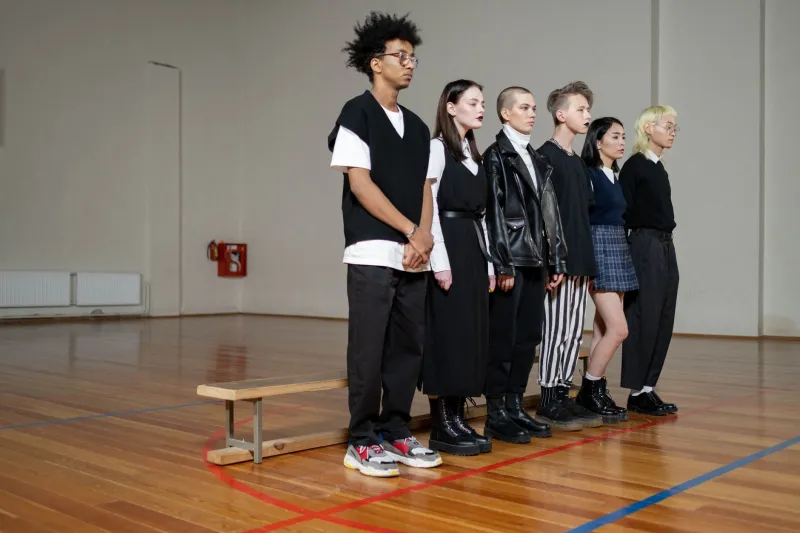
This isn't about wearing the exact same shirt seven days in a row (unless that's your thing, in which case, respect). It's about developing a consistent visual language — a set of silhouettes, colors, and textures that feel like home every time you put them on.
Start by identifying what already works. Go through your closet and pull out the pieces you reach for without thinking. Chances are there's a pattern — maybe it's always oversized, always dark tones, always athletic cuts. That pattern is your aesthetic trying to tell you something.
From there, it's about doubling down instead of diversifying. Buy the same hoodie in two colors instead of buying four different styles you're not sure about. Invest in quality over quantity so your core pieces hold up over time. Let the fit become familiar enough that putting it on feels automatic.
The goal is to get to a place where your outfit is no longer a daily question — it's a daily statement.
Confidence Is the Actual Flex
At the end of the day, the uniform mindset isn't really about clothes. It's about knowing yourself well enough to stop performing for everyone else. It's about stepping outside your door in the same fit you wore last Tuesday and not losing a single second of sleep over it because you know who you are and what you're about.
The streets can tell the difference between someone chasing trends and someone setting their own terms. One of those people is always looking over their shoulder. The other one is just walking.
Wear the same fit. Own the room. That's the game.